
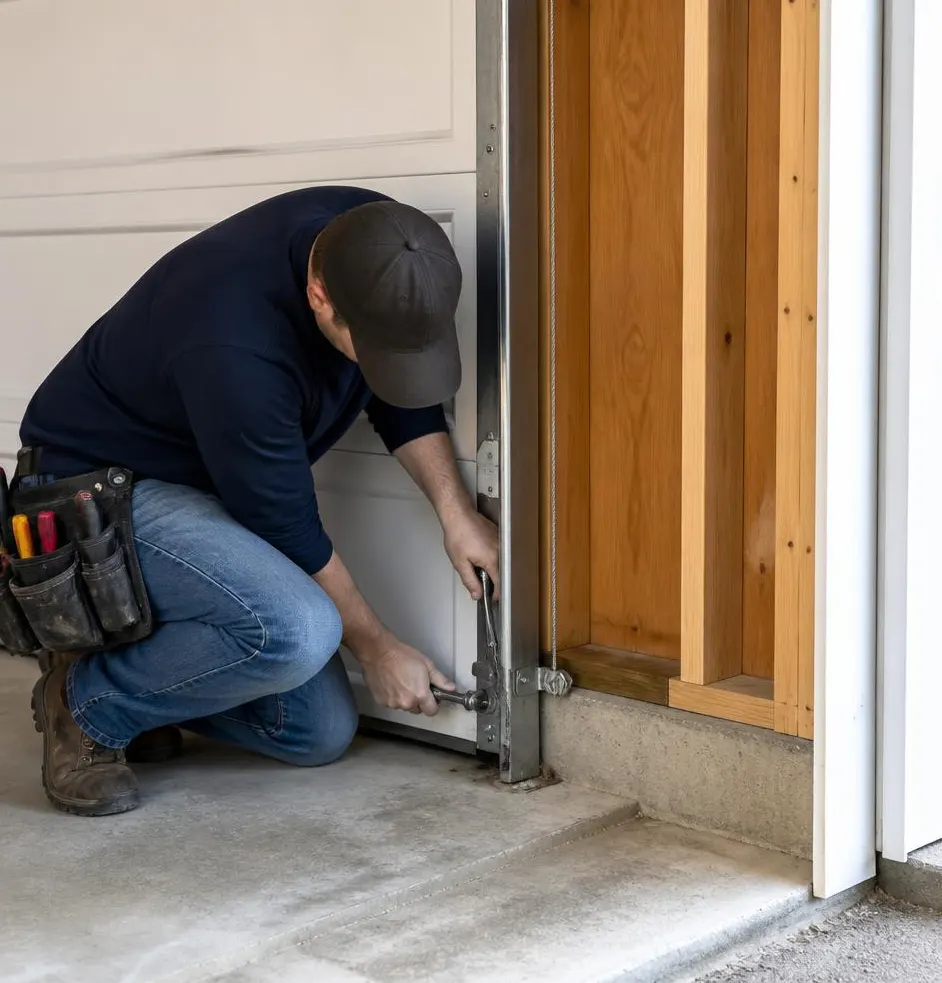
Here's the short version to settle the argument: that rust bubble and the swollen spot at the bottom of the door are not "just cosmetic," and waiting another season to deal with them usually turns a $150-$400 panel repair into a $900-$1,800 full door replacement. Moisture damage doesn't pause for winter. It keeps working on the door every time it rains, every time the snow melts off your car and pools on the slab, every time salt-brined water splashes up from the driveway. One more season of "we'll get to it" is exactly how a small spot becomes a structural problem.
What's Actually Happening to the Door
Garage doors fail from moisture in two different ways, depending on what they're made of, and knowing the difference tells you how urgent this is.
- Steel doors rust. Paint and galvanizing are the only things standing between bare steel and water. Once that coating chips, scratches, or wears thin at the bottom edge (the part that sits closest to road salt and standing water), rust starts underneath the paint where you can't see it until it bubbles up.
- Wood and composite doors swell. The material soaks up moisture like a sponge, expands, and then doesn't fully shrink back when it dries. Repeat that cycle enough times across humid summers and wet winters, and the door warps, the panels stop sealing against each other, and the frame can start to pull away from the hardware.
Both problems start small and stay invisible for a while. That's the part worth saying out loud during the argument: the fact that it "still opens and closes fine" doesn't mean nothing is wrong.
Why This Hits Harder Here Than in a Dry Climate
A garage door in a dry Southwestern climate can go years with a paint chip and nothing happens. That's not the deal in Ohio. Summers here run humid, which means condensation forms on cold steel doors even when it isn't raining, especially overnight when temperatures drop. Winters bring ice, snow, and road salt, and that salty slush gets tracked or splashed onto the bottom 6-12 inches of the door nearly every time a car pulls in. That band at the bottom is almost always where rust and swelling start first, because it's the part that actually sits in standing moisture and salt residue instead of just getting rained on.
The spring storm season adds another layer: wind-driven rain gets up under the bottom seal and into panel seams that would stay dry in a straight-down rain. So a door here is dealing with condensation, standing meltwater, salt, and sideways storm rain in the same twelve months. That's four different ways for moisture to get in, not one.
What to Actually Look For
- Bubbled or flaking paint, especially near the bottom panel or around hinges and screws
- Orange-brown streaks running down from a hinge, roller bracket, or seam
- A section of the door that feels soft, spongy, or slightly swollen when you press on it
- Panels that no longer line up evenly, or a bottom seal that doesn't sit flat anymore
- Rust-colored water stains on the garage floor directly under the door
- A door that's noticeably harder to lift, which can mean a warped panel is binding in the track
The Trade-Off: Fix It Now vs. Wait
This is the part that usually settles the debate. Caught early, rust spots can be sanded down, treated, and repainted, or a single damaged panel can be swapped out. That's a contained job. Left alone, rust spreads under the paint where you can't monitor it, and swollen wood sections keep absorbing water every humid stretch until the wood fibers break down for good. At that point you're not patching a panel, you're often replacing the whole door, because matching one new panel to years-old weathered ones rarely looks right anyway, and a warped frame can throw off the whole opener system.
There's also a safety angle that gets skipped in these arguments: a swollen or rusted-through panel changes the weight and balance of the door. Openers and springs are calibrated for a specific weight. A door that's absorbed water is heavier on one side, which puts extra strain on the spring and the opener motor, both of which are already working harder in Ohio's cold-weather months.
When to Call Akron Garage Door Service
If you're seeing rust bubbling through paint, a panel that feels soft or doesn't sit flush anymore, or the door has gotten noticeably heavier to lift, that's the point to call rather than keep watching it. We'll inspect the panel, the bottom seal, and the track alignment to figure out whether this is a garage door repair you can contain now or whether moisture has gotten far enough that a full garage door installation makes more sense long-term. We'll also check the springs while we're there, since a heavier, water-damaged door puts them under more stress than they're rated for.
If you're anywhere in Akron, Cuyahoga Falls, Barberton, Tallmadge, Stow, Fairlawn, Copley, or Mogadore and you've been having this exact argument at home, call Akron Garage Door Service and we'll settle it for you, honestly and on time.